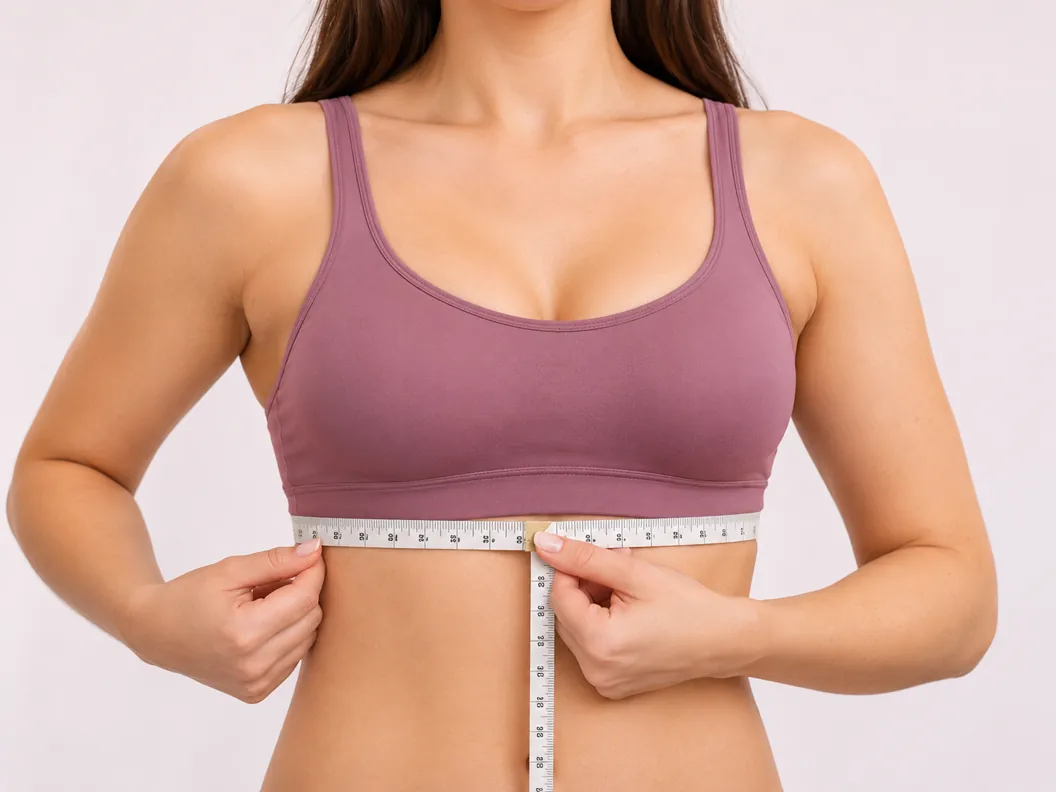
Step 01
Measure your snug underbust
Wrap the tape around your ribcage directly below the bust, where your bra band normally sits.
- Keep the tape level around your back
- Measure snugly without painful pressure
- Exhale naturally and read the measurement
Free measurement-based tool
Find a practical starting size using your underbust and bust measurements. Then check the band, cups and fit—before choosing a bra.
A bra size estimate is a first size to try—not a guarantee of fit in every brand or style. Our quick model supports a limited band and cup range and explains when it cannot calculate.
A little guidance goes a long way
No need to figure everything out at once. Pick what matters right now.
Start with two measurements.
Calculate sizeCompare UK, US, EU and more.
Convert sizeFind out why your bra gaps, slips or digs in.
Check my fitFind a shape and style to try.
Explore bra typesMeasuring help
All you need for the quick calculator is a soft measuring tape and two measurements. The photographs show tape placement as a general example; they are not personalized fitting instructions.
Step 01
Wrap the tape around your ribcage directly below the bust, where your bra band normally sits.
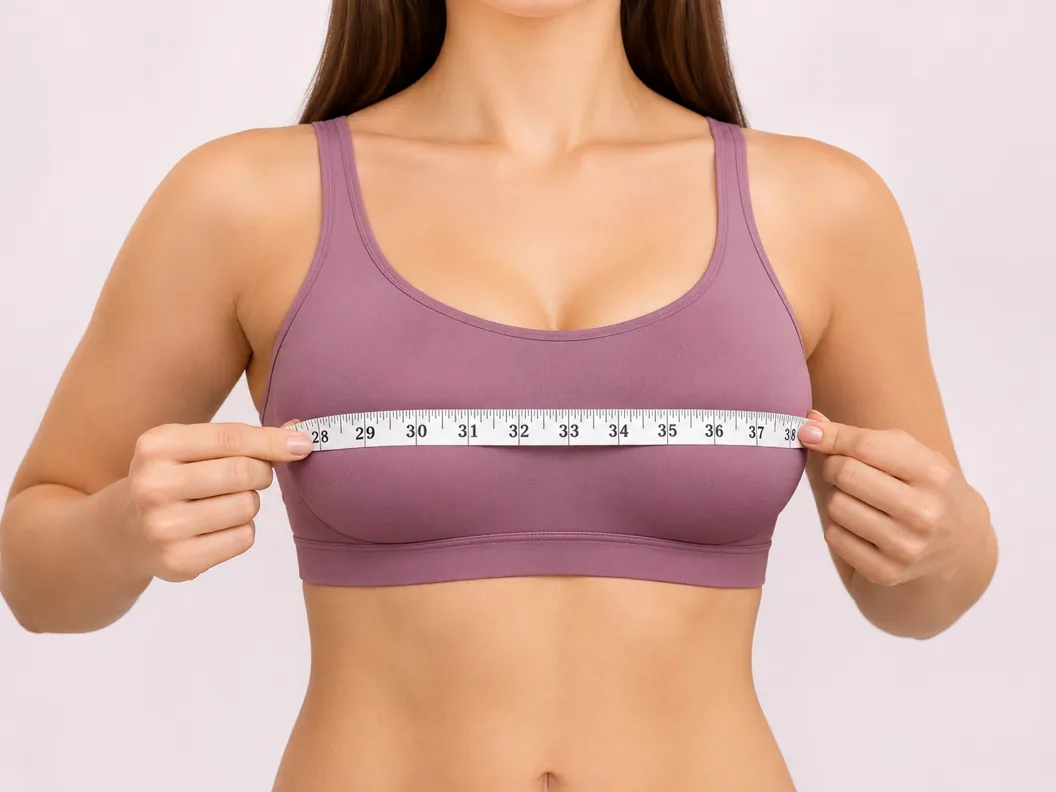
Step 02
Wrap the tape around the fullest part of the bust. Keep it horizontal without flattening the tissue.
Before measuring: Stand naturally, keep the tape untwisted, and ask someone for help if you cannot keep it level at the back.
Full measuring guide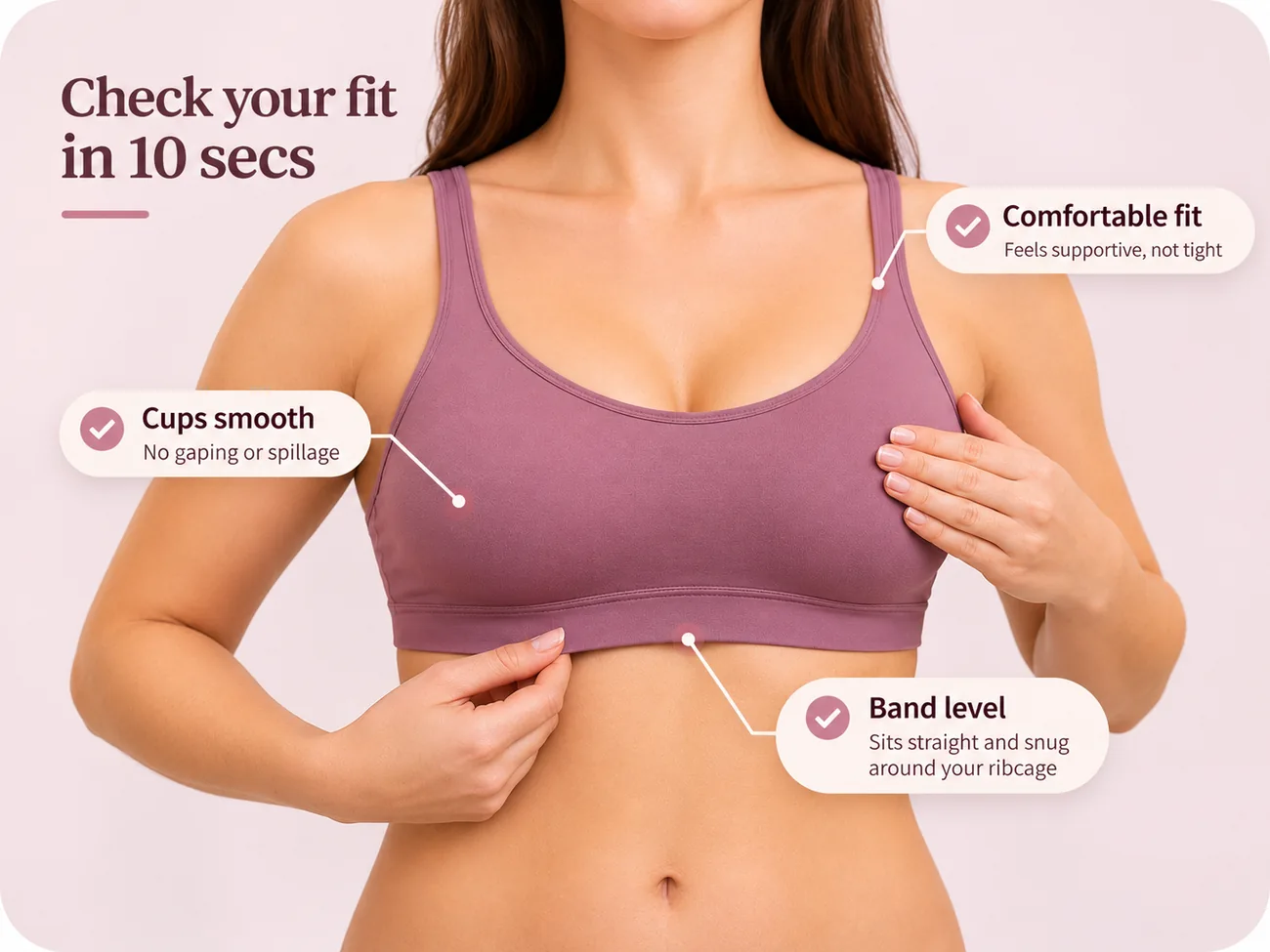
After calculating
The label is a starting point. How the bra feels and moves matters just as much.
It should feel comfortably snug and stay in place without riding up.
Look for gaping, spillage or uncomfortable pressure.
Straps and wires should feel supportive, not painful.
Persistent or new breast pain and changes should be discussed with a healthcare professional.
Here when you need them
Only explore what helps. A good fit should feel comfortable—not confusing.
How the estimate works
The calculator uses a simplified UK-style band-and-cup model. It is a guide for choosing a first size to try—not a professional fitting or a medical assessment.
See the India bra size chartUnderbust is converted into inches and rounded to a supported even-numbered UK-style band.
The difference between standing bust and the estimated band determines the starting cup letter.
Snug, Regular or Comfort can adjust the band suggestion. The result explains when an adjustment changes the label.
The quick model supports bands 28–44 and cups AA–H. Unsupported combinations show a message instead of a forced size.
Helpful answers
Sizing can take a little trial and adjustment. These answers can help you make a more confident next choice.
Measure snugly around your ribcage below the bust, then around the fullest part of the bust. Enter both numbers in the same unit. The calculator estimates an initial UK / India-style band and cup label.
It offers a useful starting estimate, not an exact fitting. Band elasticity, cup shape, body shape, brand charts and how you measured all affect the size that feels best.
Different sizing methods and brand charts can produce different labels. First check that your measurements are correct, then assess whether the new band stays level and the cups feel comfortable.
An unpadded, supportive bra may help some people take a standing bust measurement. Others may be comfortable measuring without one. Avoid padding or compressing the bust.
The preference changes the band allowance in this simplified model. When the band changes, the calculator may adjust the cup letter to approximate a similar cup volume. It is an option to try, not proof that one preference is the correct fit.
This quick model currently supports UK-style bands 28–44 and cups AA–H. Some measurements or comfort adjustments fall outside its supported range. The tool will explain the limitation instead of guessing. A brand chart or specialist fitting can help with other ranges.
Indian retailers often use UK-style band and cup labels, but there is no universal brand-independent mapping. Check the specific retailer's chart, particularly for cups above D.
Some asymmetry is common. Try fitting the larger side first, then adjust the smaller side if needed. If a bra gaps, digs in or rides up, compare its style and construction as well as its size. Seek medical advice for persistent pain or concerning changes.
Need a little more help deciding what to try next?
Open Fit Checker