How to Measure Panty Size at Home
Last updated: March 28, 2026
With a soft measuring tape and a mirror, you can get a much better starting point for panty sizing in just a few minutes. This guide shows how to measure your natural waist and fullest hips correctly, avoid common mistakes, and use your numbers properly.
How this page helps
This guide helps you measure waist and hips more accurately and use those numbers more confidently when choosing panty sizes.
Method
The measuring guidance on this page is based on standard waist-and-hip measurement methods and common clothing-size comparison logic.
Expert Reviewed
By Pooja Panwar • Fit & Lingerie Content Reviewer
Quick answer
To measure panty size at home, you need two numbers: your natural waist and your fullest hips. Measure both with the tape level to the floor, and usually trust the hip measurement first if the two numbers suggest different sizes.
Find your natural waist, not a low-rise waistband line.
Measure the fullest part of your hips and seat with feet together.
Keep the tape level all the way around your body.
Use hips first, then refine by waist comfort and fabric.
Most useful shortcut: if your usual panties feel fine at the waist but dig, shift, or feel skimpy at the seat, your hip measurement is probably the number that needs more attention.
Start here based on what you need
I only want the fastest accurate starting point
Measure waist and hips once carefully, then use the calculator.
Go thereI am not sure where the waist really is
Use the natural-waist step first before guessing from jeans or low-rise styles.
Go thereMy waist and hips do not match one size
That is normal. Hip measurement usually matters more for final panty fit.
Go thereI want to avoid ordering the wrong style
After measuring, compare the style guide too because briefs, thongs, and high-waist styles can feel different.
Go thereBefore you start
Step 1: Measure your natural waist
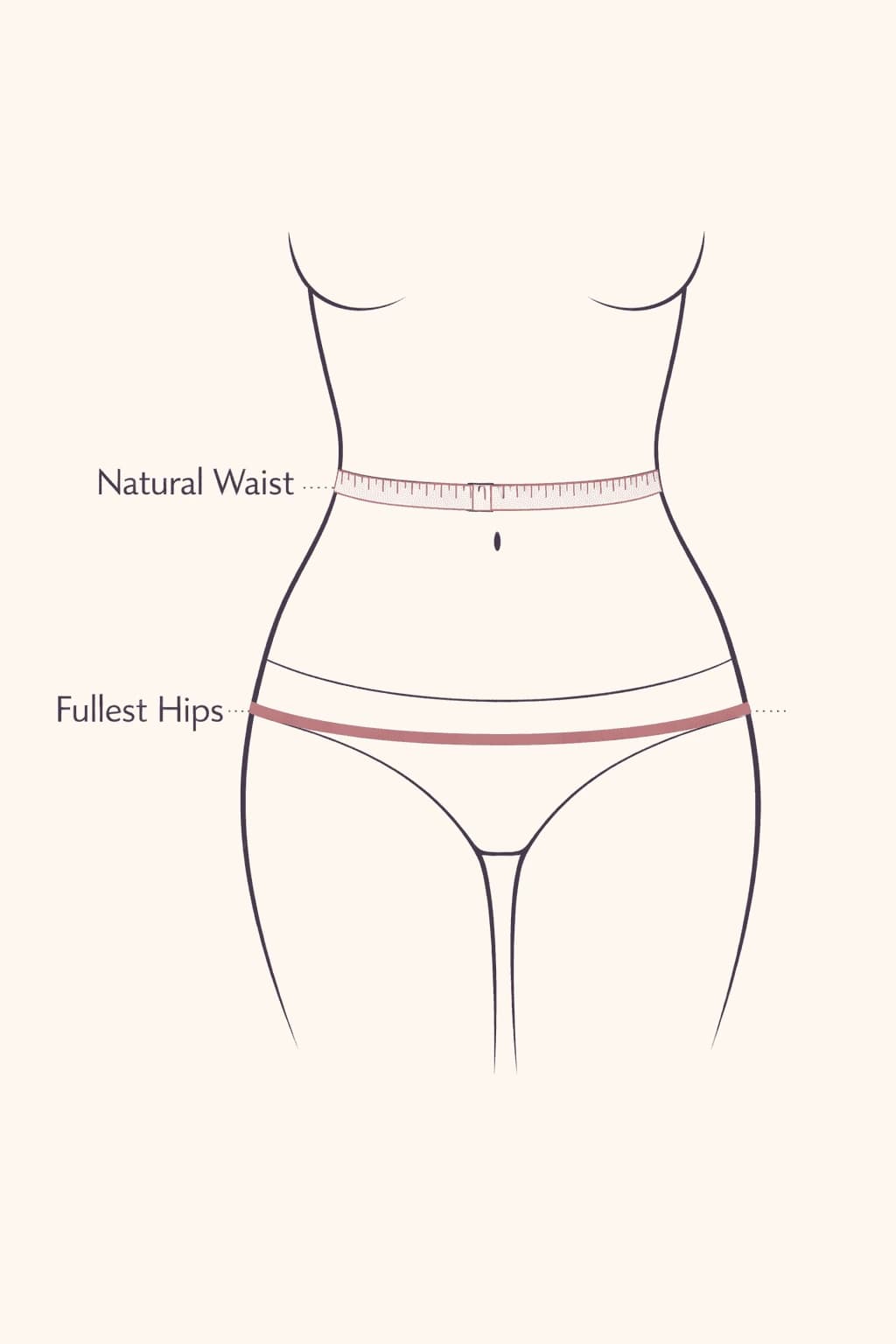
Your waist measurement helps refine waistband comfort, rise, and how snug a style may feel. The most common mistake is measuring too low.
Step 1.1
Find your natural waist at the narrowest part of your torso. Bending sideways usually shows the crease.
Step 1.2
Wrap the tape around that point and keep it parallel to the floor.
Step 1.3
Let the tape sit close to the body without digging in or compressing the skin.
Step 1.4
Record the number after a normal breath out, not while holding your stomach in.
Tape posture check
A level tape matters more than people think. A tape that rises or dips can shift your number enough to move you into the wrong size range.
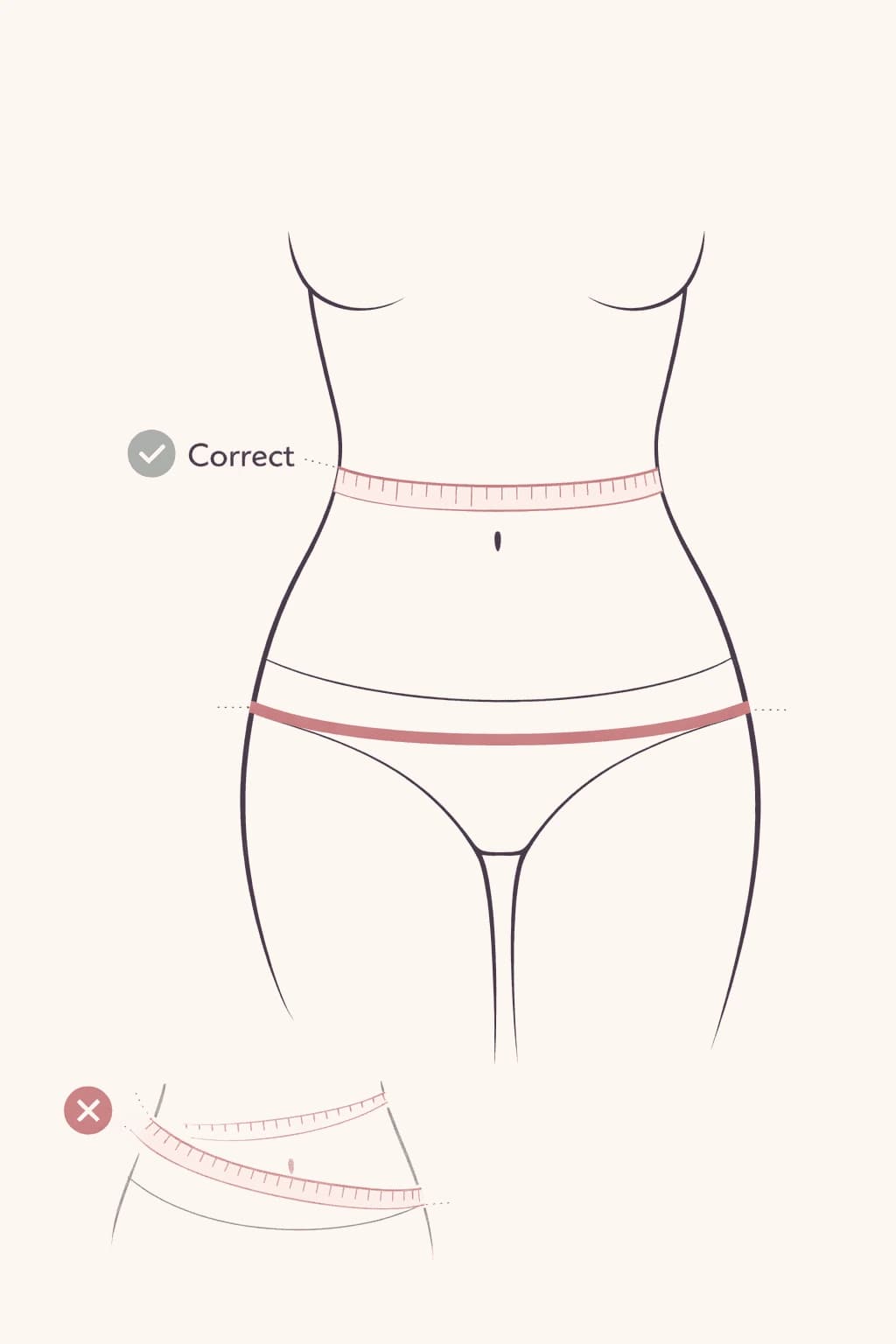
The tape should look straight across the front, not slanted.
At the back, it should stay level instead of rising or dipping.
If the tape twists or folds, start again for a cleaner number.
A mirror check matters most when measuring hips because tilt is easy to miss.
Step 2: Measure your fullest hips
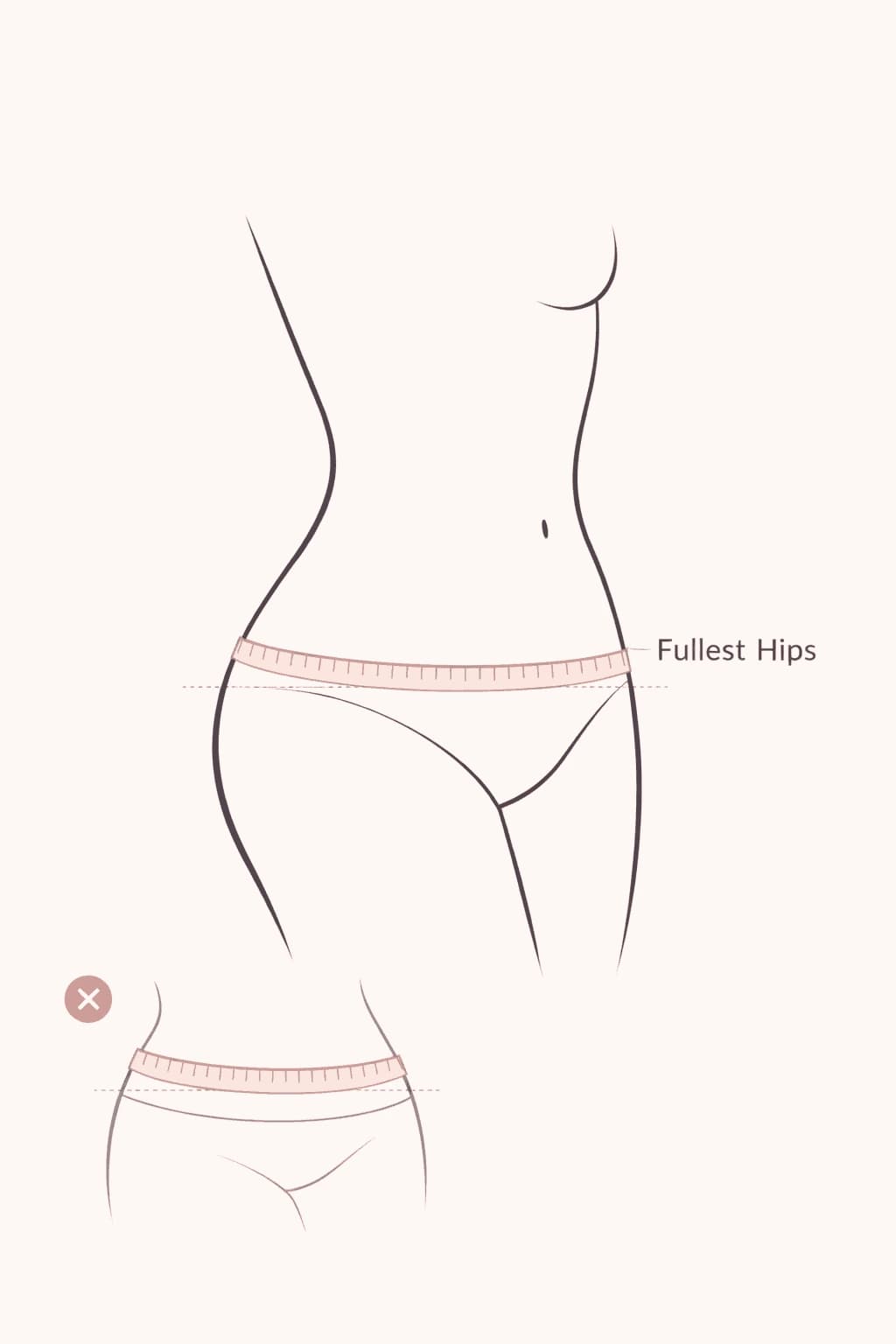
For most panty sizing decisions, your hip measurement is the more important number. This is the number that usually protects comfort, coverage, and visible fit.
Step 2.1
Stand with your feet together so the tape does not loosen around the seat.
Step 2.2
Measure around the fullest part of your hips and buttocks, not the high-hip area.
Step 2.3
Keep the tape parallel to the floor all the way around your body.
Step 2.4
If you are unsure, take two measurements at slightly different heights and keep the larger true fullest-hip number.
Step 3: Recheck and confirm
Retake both measurements once if either number looks unusual or changes a lot with small tape movement.
Write the numbers down immediately in inches or centimeters.
Use both measurements together in a chart or calculator, with hips usually carrying more weight for final fit.
Common measurement mistakes
Measuring too low and using a low-rise trouser line instead of your natural waist.
Pulling the tape too tight, which can force you into a smaller size that digs at the waist or leg openings.
Measuring the high hip instead of the fullest part of the hips and seat.
Letting the tape rise or dip at the back, especially during hip measurement.
Measuring over jeans, leggings, or thick lounge bottoms that add bulk.
Standing with feet apart while measuring hips, which can reduce accuracy.
What if waist and hips suggest different sizes?
In most cases, base your panty size on the hip measurement first. A size that fits your hips well is usually more wearable than a smaller size chosen only to match your waist. Then adjust for style, rise, and fabric stretch if you are near a size boundary.
Usually choose hip-first when
- • The fabric feels firm or not very stretchy
- • The style covers more of the seat
- • You often get digging, shifting, or skimpy back coverage
Then refine with waist comfort if
- • You are near a size boundary
- • The style is high-waist or firm at the top edge
- • You know you dislike tight waistbands
No measuring tape? Wrap a string around your waist and hips, mark the length, and then measure that string against a ruler. It is not as ideal as a soft tape, but it is still much better than guessing by labels alone.
What to do after measuring
Use the panty size calculator
Enter your waist and hip measurements to get a better starting size and between-size guidance.
OpenCheck the India size chart
Compare your numbers with chart-based sizes, conversions, and fit notes.
OpenLearn which style suits you
See how briefs, bikinis, thongs, boyshorts, and high-waist styles can fit differently.
OpenFrequently asked questions
Should I measure panty size at the waist or the hips?
Use both, but hips usually matter more for overall panty fit because the fabric has to sit comfortably around the fullest part of your body. Waist helps refine comfort at the waistband, especially for high-waist or firmer styles.
Where exactly is the natural waist for panty sizing?
Your natural waist is the narrowest part of your torso, usually above the belly button. If you bend sideways, the crease that forms often shows the correct spot. Do not use the low-rise line where jeans may sit.
Should I measure over clothes or directly on the body?
Measure over bare skin or thin underwear whenever possible. Thick clothing can add extra bulk and shift the tape, especially around the hips, which can move you into the wrong size range.
What if my waist and hips fall into two different sizes?
In most cases, choose the size that better matches your hip measurement first, then use waist comfort, rise, and fabric stretch to decide whether to stay there or go up. Panties that fit the hips properly are usually more comfortable than panties chosen only for a smaller waist.
Can high-waist, seamless, and thong styles fit differently in the same size?
Yes. High-waist styles can feel firmer at the waistband, seamless styles may feel more forgiving, and thongs often have less seat coverage even when the size label is the same. Style and fabric can change how a size feels on the body.
How often should I remeasure my panty size?
Remeasure after noticeable weight change, pregnancy or postpartum changes, major training changes, or whenever your usual panties suddenly start digging, rolling, or feeling loose. Even small body changes can affect underwear comfort.
Once you have both measurements, you can enter them into our panty size calculator to get a better starting size, between-size guidance, and clearer next steps for chart checks and style decisions.
Use your measurements next
Add your waist and hip measurements to the calculator, then compare the result with the India chart if you want an extra reference before buying.