Maternity & Nursing Bra Size Guide
Last updated: March 2026
Pregnancy and nursing can change both your band and cup fit more than once. This guide explains when to buy, when to measure, what bras to wear at each stage, and how to avoid the most common sizing mistakes.
How this page helps
This page helps you understand how bra size can change during pregnancy and nursing and when it may be useful to remeasure.
Method
The guidance on this page is based on common fit changes during pregnancy and nursing, flexible bra-fitting practices, and general size-adjustment logic.
Note
This page offers bra fit guidance only and does not replace medical advice. For persistent pain, swelling, skin issues, or breast changes, consult a qualified medical professional.
Expert Reviewed
By Pooja Panwar • Lead Bra Fit Specialist
Quick answer
Best pre-birth buying window
Around 35–36 weeks is usually the best time to buy your first real nursing bras. Earlier in pregnancy, your body may still change too much.
Best nursing-time measuring moment
If you are already breastfeeding, measure before a feed or pumping session, when your breasts are fuller and the fit test is more realistic.
Best strategy: wear soft, stretchy bras early, buy your first true nursing bras in late pregnancy, then reassess again once postpartum fullness becomes more predictable.
Start here based on your situation
I am pregnant and my bras already feel uncomfortable
Start with soft comfort bras now, but do not buy your full nursing set too early.
Go thereI want to know the best time to buy real nursing bras
For most people, late pregnancy around 35–36 weeks is the best buying window.
Go thereI already gave birth and my size keeps changing
Measure while fuller, choose forgiving bras first, and reassess once feeding becomes more predictable.
Go thereI am not sure what type of bra I actually need
Sleep bras, nursing bras, and pumping bras solve different problems. One bra rarely does everything well.
Go therePregnancy to postpartum timeline
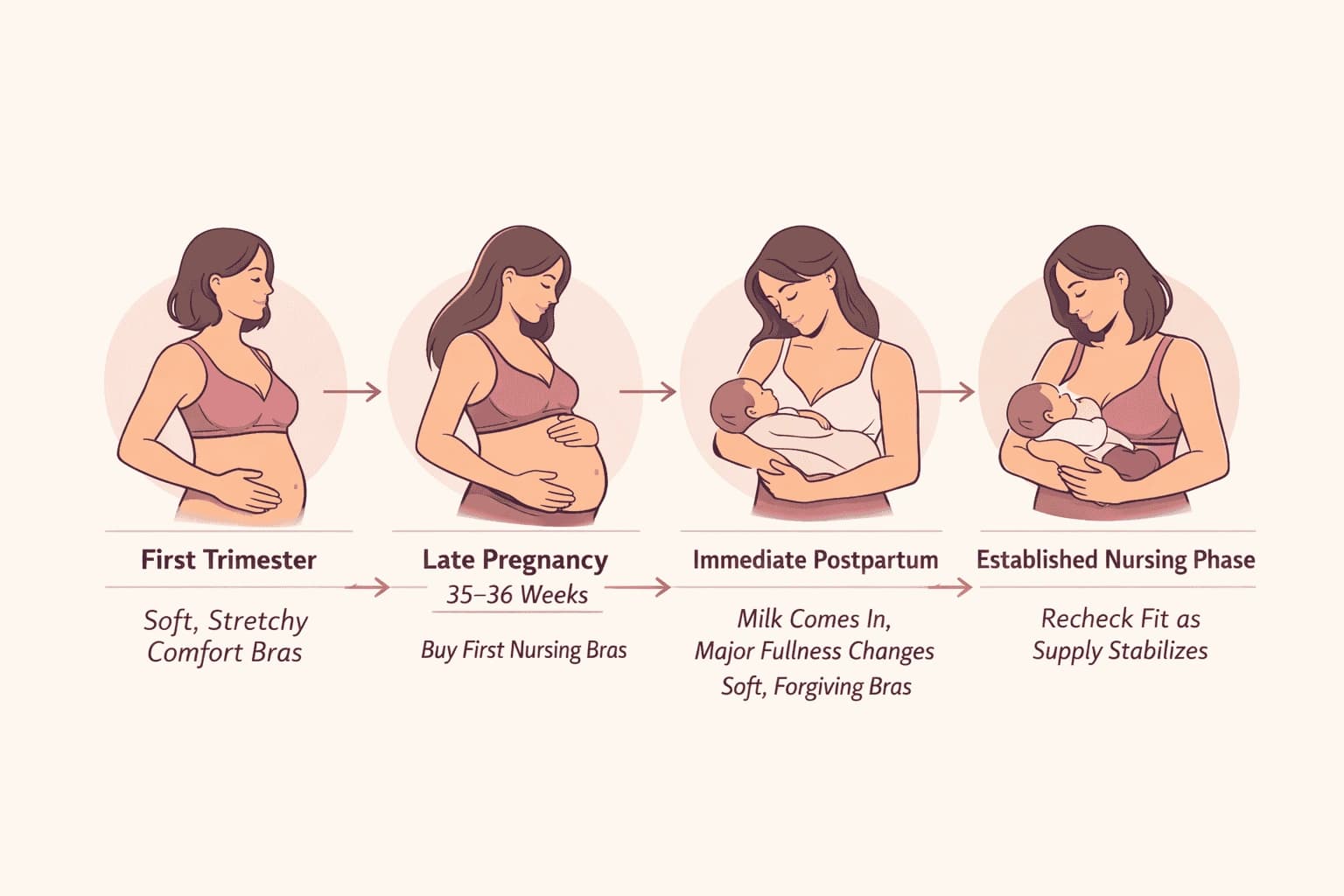
First Trimester: Prioritize comfort, not a final nursing size
Breasts can become sore, swollen, and sensitive early. This is the time for soft, wire-free, stretchy bras or bralettes that can tolerate day-to-day fluctuation.
What to buy now: Buy 1–3 soft maternity-friendly bras only if your regular bras are already uncomfortable.
Second Trimester: Your ribcage and cup size may both shift
Your underbust can expand and your old band may start to feel tight. Some people go up in band, some mostly in cup, and some in both.
What to buy now: Replace uncomfortable bras, but still avoid buying a full structured nursing-bra wardrobe too early.
Late Pregnancy: Best time to buy your first real nursing bras
This is usually the best pre-birth window for buying nursing bras because your body is closer to your early postpartum shape than it was in the first trimester.
What to buy now: Buy 2–3 nursing bras now, ideally ones that fit on the loosest hook and have flexible cups.
Immediate Postpartum: Expect major fluctuation when milk comes in
In the first few days postpartum, breasts can become much fuller and firmer. Comfort, stretch, and softness matter more than perfect structured shaping here.
What to buy now: Use sleep bras, crossover bras, or very forgiving nursing bras while fullness is changing fast.
Established Feeding Phase: Recheck fit once your feeding pattern is more predictable
Once things feel less chaotic and your day-to-day fullness becomes more predictable, you can reassess whether you need a better everyday nursing bra or a more structured option.
What to buy now: This is a good time to refine fit and add better day bras if your first set no longer feels right.
What to buy at each stage
First trimester
- • Soft bralettes
- • Seamless maternity bras
- • Wire-free comfort bras
Do not overbuy here. You are shopping for comfort through change, not a final nursing fit.
Second trimester
- • Flexible maternity bras with more hook settings
- • Supportive wire-free bras
- • Stretch-friendly cups
Replace what hurts, but still avoid assuming this will be your postpartum nursing size.
35–36 weeks
- • 2–3 nursing bras
- • 1 sleep bra
- • Optional pumping bra if you know you will pump often
This is the best time to build your first real nursing-bra set before delivery.
Early postpartum
- • Soft sleep bras
- • Stretchy crossover nursing bras
- • Very forgiving day bras
Fullness may change dramatically during this stage, so structure matters less than comfort and adjustability.
What matters most right now
Focus on this
- • Softness and flexibility during fast size changes
- • Enough support without painful pressure
- • Room for fullness changes and nursing pads
- • Easy feeding or pumping access if needed
- • Not overbuying too early
What usually backfires
- • Trying to lock in a final nursing size too early in pregnancy
- • Buying stiff molded cups before postpartum changes settle
- • Choosing a band with no room to tighten later
- • Expecting one bra to work for sleep, feeding, pumping, and outside wear equally well
- • Ignoring pain because the bra looks right on paper
How to measure at 35–36 weeks
Late pregnancy is the best time to measure for your first real nursing bras before delivery. The biggest difference from normal bra buying is how you apply the fit once you try the bra on.
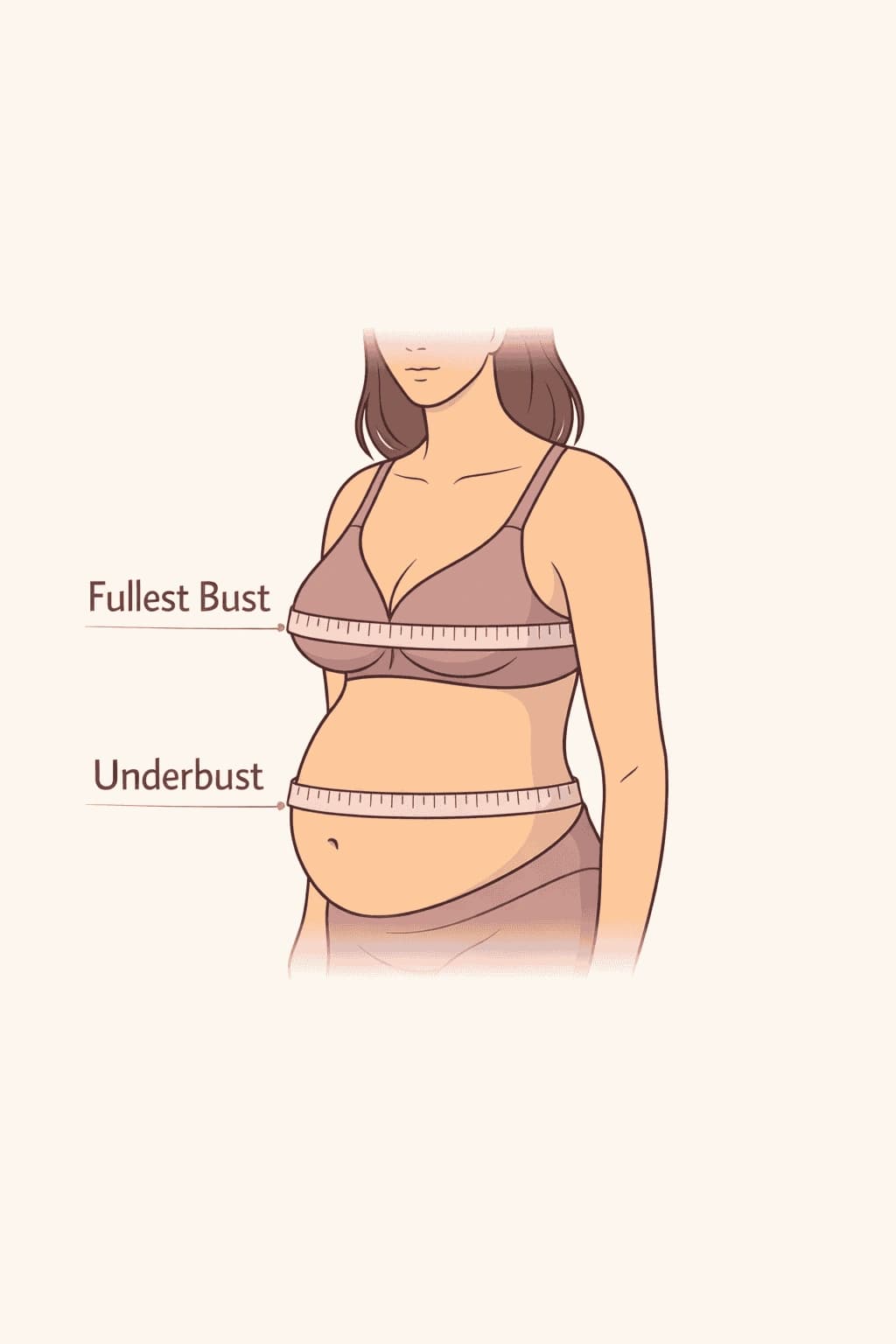
Wear a non-padded, non-compressive bra if possible.
Measure your underbust snugly under the breasts while keeping the tape level.
Measure around the fullest part of the bust while standing naturally.
Try nursing bras on the loosest hook so you have room to tighten later as your ribcage settles.
Choose cups with a little flexibility for nursing pads and normal fullness changes.
Late-pregnancy fit rule: the band should usually fit on the loosest hook, not the tightest, because your ribcage often settles down after birth.
How to measure while nursing
Once you are breastfeeding, timing matters. Measure when your breasts are fuller, not only after they have just emptied.
Measure before a feed or pumping session, when your breasts are fuller.
Use the same underbust and fullest-bust method, keeping the tape level.
Do not judge fit only when your breasts are at their emptiest point.
If one bra feels fine right after feeding but painfully tight before feeding, the style may be too rigid.
Recheck size if your bras start digging, the center front floats, or you constantly spill after the first weeks.
Most useful mindset: do not expect a perfectly consistent breast size in early nursing. Aim for a bra that remains comfortable across normal fullness changes.
What a good nursing bra fit feels like
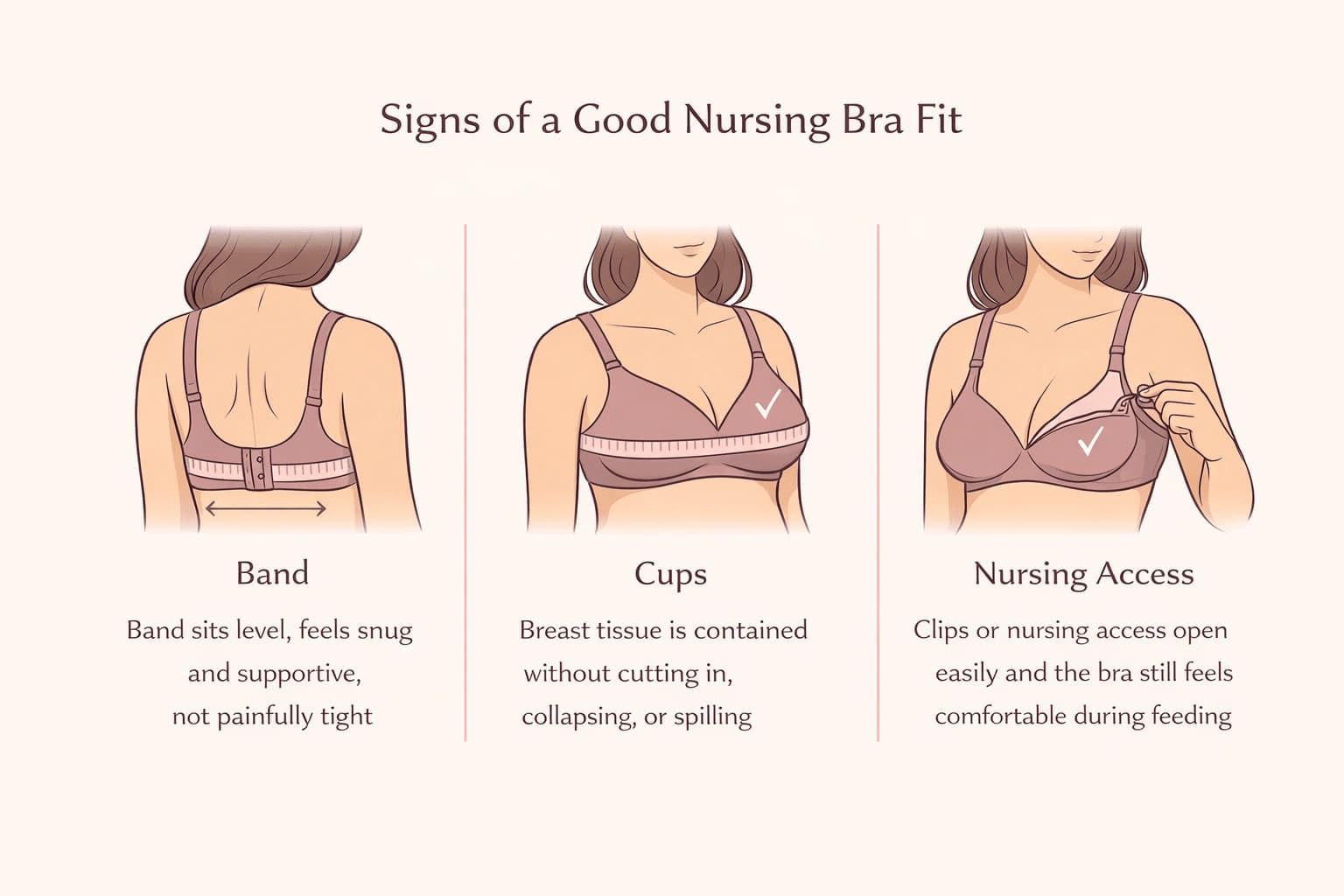
The band feels snug and supportive, but not suffocating, and sits level around the body.
The cups hold breast tissue without cutting in, collapsing, or forcing you to adjust constantly.
You can open and close clips or feeding access easily, ideally with one hand.
The bra remains comfortable when sitting, bending, and holding the baby.
The fabric has enough flexibility for pads and normal fullness shifts without becoming unsupportive.
Nursing vs pumping vs sleep bras
Most people are more comfortable with more than one bra type during this phase. One bra rarely does everything equally well.
Sleep bra
Best for overnight wear, early postpartum softness, and holding nursing pads. These are usually the least structured and the most forgiving.
Nursing bra
Best for daytime feeding. These usually have drop-down cups or easy-access panels and offer more support than a sleep bra.
Pumping bra
Best if you pump frequently and want hands-free support for flanges. Some pumping bras are dual-use for pumping and nursing, but not all are equally comfortable for both.
Simple rule: use sleep bras for softness, nursing bras for easier daytime feeding, and pumping bras when hands-free pumping matters often.
Common mistakes
Comfort warning: discomfort is not something you should simply put up with during pregnancy or nursing. A bra that digs, rubs, presses, or feels impossible to tolerate is a sign to change the fit or the style.
Frequently asked questions
When is the best time to buy nursing bras before delivery?▼
For most people, around 35–36 weeks or about eight months pregnant is the best pre-delivery window. That is usually much closer to your early nursing shape than buying too early in pregnancy.
Should a nursing bra fit on the loosest or tightest hook in late pregnancy?▼
Usually on the loosest hook. That gives you room to tighten the band later as your ribcage settles down after birth.
When should I measure my bra size while breastfeeding?▼
Measure before a feed or pumping session, when your breasts are fuller. That gives a more practical fit reference for nursing bras than measuring only after feeding.
Can my bra size change again after my milk comes in?▼
Yes. In the first days postpartum, fullness can change dramatically. That is why very early postpartum bras should be soft and forgiving rather than overly structured.
Do I need separate nursing and pumping bras?▼
Not always, but many people are more comfortable with different bras for different tasks. A good nursing bra is not always the best hands-free pumping bra, and a pumping bra is not always ideal for sleep.
Can I wear underwire while nursing?▼
Many people prefer to avoid rigid underwires early on because nursing breasts can fluctuate a lot and pressure points can become uncomfortable. If you later wear a more structured bra, it should fit carefully and never press into breast tissue.
If you are measuring in late pregnancy or postpartum, use the bra size calculator as a starting point, then apply the nursing-specific fit rules above for hook position, cup flexibility, and timing.
Find your starting bra size first
If you are around 35–36 weeks or rechecking postpartum fit, start with your underbust and bust measurements, then use the calculator before choosing your next bra.