First Bra Guide for Teens
Last updated: March 2026
A first bra should feel gentle, private, and low-pressure. This guide helps parents and teens understand when it may be time, what beginner styles make sense, and how to measure comfortably at home.
How this page helps
This guide helps first-time bra shoppers understand the basics of measuring, fit, and getting started without overcomplicating the process.
Method
The guidance on this page is based on beginner-friendly measuring steps, standard size logic, and common first-bra fit considerations.
Expert Reviewed
By Pooja Panwar • Lead Bra Fit Specialist
Quick answer
When may it be time?
- • Early breast development or tenderness
- • Sports or movement discomfort
- • Clothing visibility concerns
- • The teen simply asks for one
Best first purchase
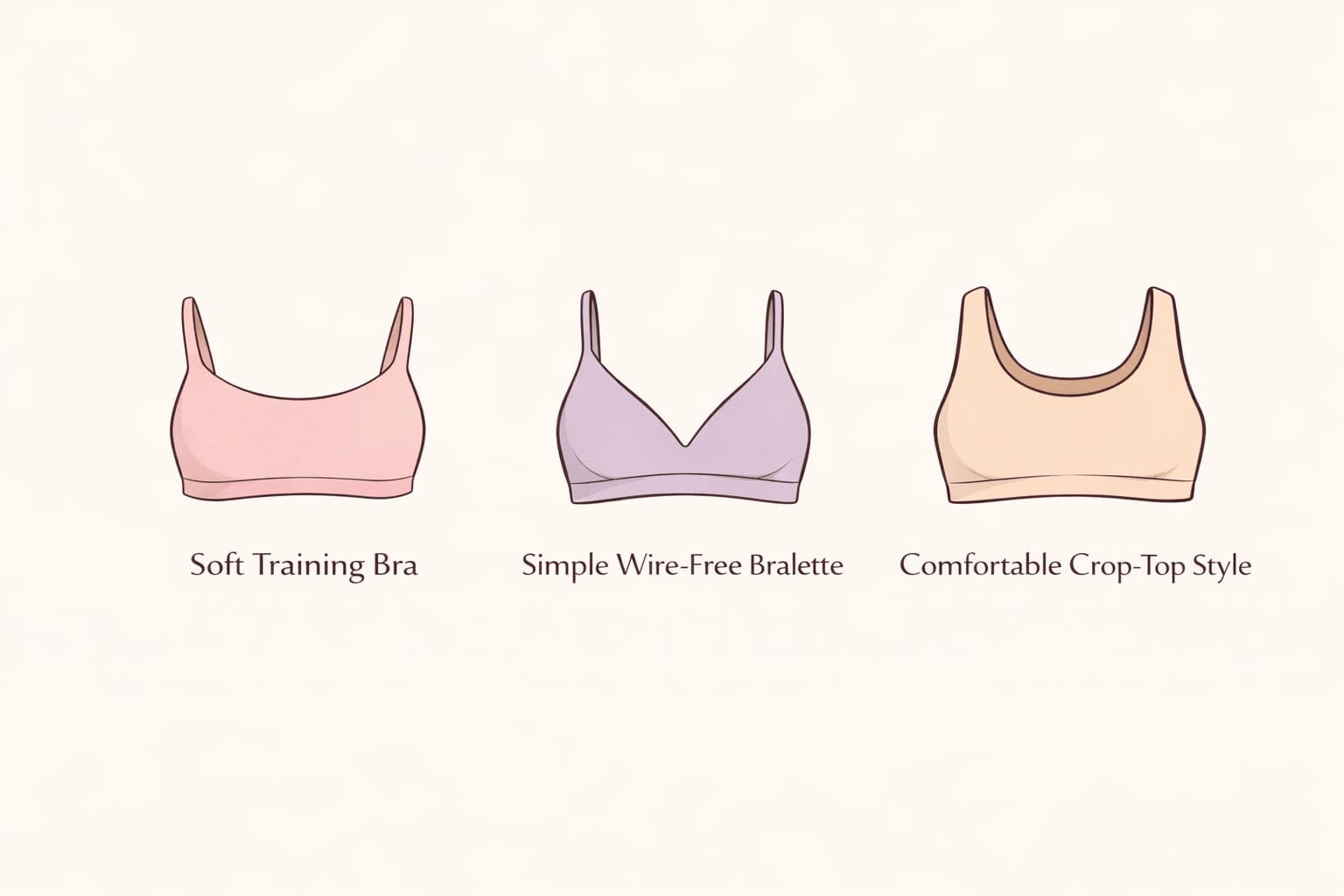
- • Soft cotton or seamless training bra
- • Lightweight wire-free bralette
- • Simple XS/S/M/L sizing
- • No underwire, push-up, or heavy structure
Best rule: a first bra should feel comfortable, private, and easy to wear. It does not need to look or feel like an adult structured bra.
Start here based on your situation
We only want something soft and simple
Start with a training bra, crop-top bra, or a soft wire-free beginner bralette.
Go thereWe are not even sure if it is time yet
Look at the comfort signs first. There is no single right age or exact milestone.
Go thereWe want to measure without making it awkward
Use the comfort-first measuring steps and keep the process private and calm.
Go thereWe do not want to overbuy too early
That is smart. Start with 2 or 3 simple bras instead of trying to build a full drawer immediately.
Go thereSigns it may be time for a first bra
There is no single correct age. A first bra is usually about comfort, modesty, confidence, and support during early development, not about rushing into a more grown-up style.
Breast budding or tenderness
Small breast buds may feel sensitive under school uniforms, rough fabrics, or sports clothing. A soft first bra can reduce rubbing and make daily wear more comfortable.
Sports or movement discomfort
If running, jumping, or PE class causes discomfort or self-consciousness, a soft low-support bra or crop-top style can help.
Clothing visibility concerns
Sometimes the main issue is not support but modesty or confidence under light tops, uniforms, or fitted t-shirts.
They ask for one
This is a perfectly valid reason. Sometimes the request is about comfort, privacy, confidence, or simply wanting to feel prepared.
What to buy first
Good first choices
- Soft cotton crop-top styles
- Seamless training bras
- Lightweight wire-free bras
- Simple bralettes with flexible stretch
Usually best to avoid first
- Push-up bras
- Rigid underwires
- Heavy padding
- Very tight sports bras
Training bra vs bralette
These are often grouped together, but they usually suit slightly different stages of comfort and development.
Training bra
Usually the simplest starting point. These are often soft, stretchy, wire-free, and sized in XS, S, M, or L. Their main job is light coverage, modesty, and comfort.
Bralette
A bralette can be a good next step when a teen wants a bit more support, shape, or structure while still staying soft and wire-free. It often works best slightly later than the earliest training-bra stage.
Simple rule: if the goal is just comfort, modesty, and getting used to wearing a bra, a training bra is usually the easiest start.
What matters most in a first bra
What matters
- • Soft fabric that does not feel scratchy or stiff
- • Easy sizing and easy wearing
- • A band that feels secure but not tight
- • Straps that do not dig in
- • A style the teen feels okay wearing
What does not matter yet
- • Adult-style shaping or cleavage
- • Fancy bra terminology
- • Perfect projected cup shape
- • Trend-led styling
- • Trying to buy for how they might grow later
How to measure comfortably and privately
Measuring for a first bra should feel calm and respectful. Privacy matters more than getting a perfect “grown-up bra fit” on the first try.
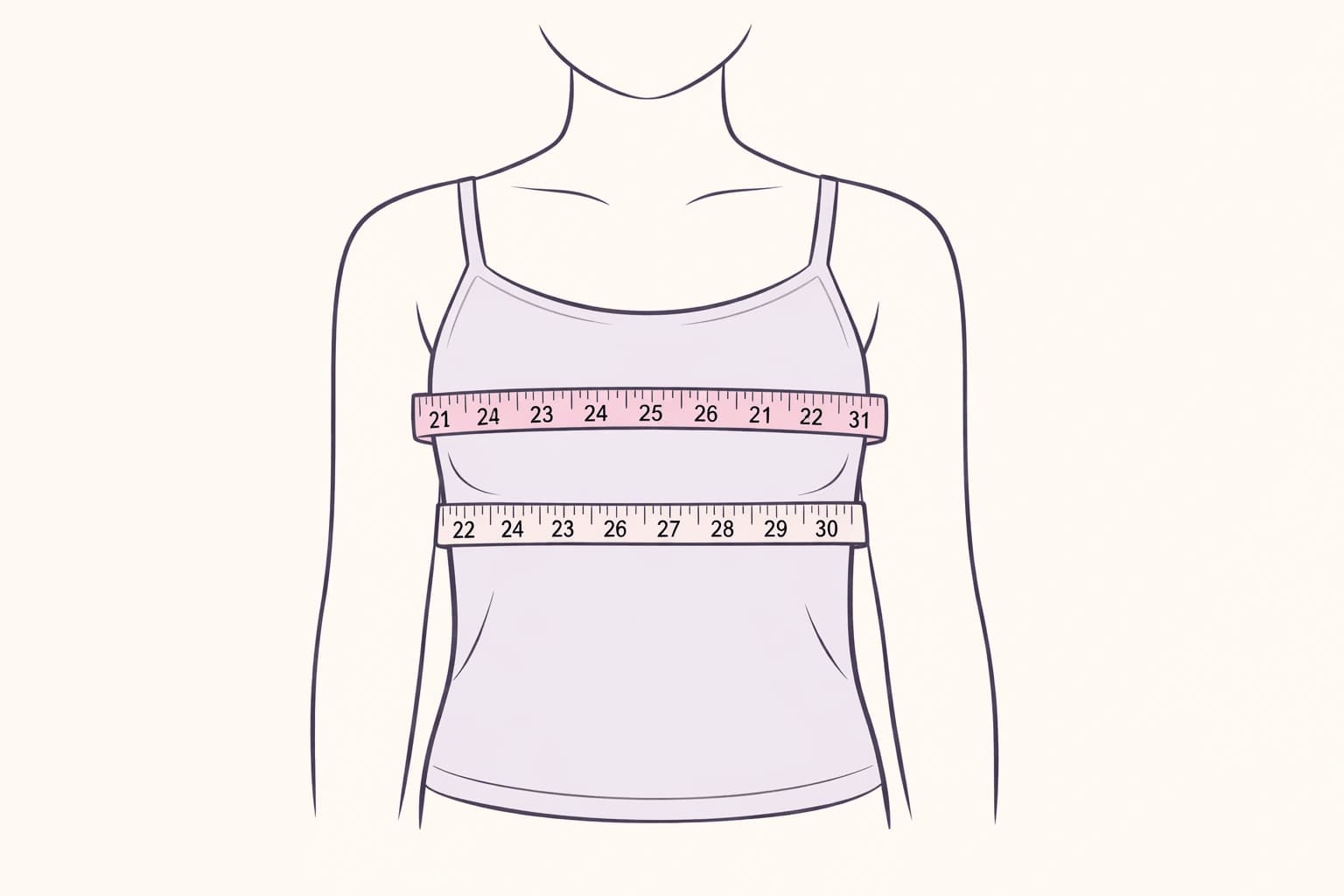
Let the teen stay in a thin, fitted t-shirt or camisole if that feels more comfortable.
Measure the ribcage where the band would sit, just under the chest, keeping the tape level and gently snug.
Measure around the fullest part of the chest with the tape resting lightly, not pulled tight.
Use the result as a starting point only. Many first bras are still bought in XS, S, M, or L rather than cup sizing.
Many teens start in simple alpha sizing first. Measurements are still useful because they make shopping easier and help avoid buying something obviously too tight or too loose.
Shopping tips for parents
What to do next
Get a starting size
Use the bra size calculator as a gentle starting reference, even if the first purchase is still an XS/S/M/L beginner bra.
Learn the measuring basics
Use the fuller measuring guide if you want more detail after this first-bra overview.
Understand beginner bra types
Read the bra styles guide if you want to understand training bras, bralettes, wireless bras, and soft everyday options better.
Frequently asked questions
What if my daughter feels embarrassed about being measured?▼
That is very common. Keep it low-pressure and private. She can measure over a thin, fitted t-shirt or tank top, and she can even hold the tape herself while a parent only helps explain where it should sit.
Do training bras have cup sizes?▼
Usually no. Most early training bras use XS, S, M, or L sizing instead of cup letters. They are designed for early development, comfort, and light coverage rather than structured shaping.
How tight should a first bra feel?▼
A first bra should feel comfortable, not restrictive. The band should stay in place without digging in, and the straps should not leave deep marks. The goal is gentle support and coverage, not firm compression.
What is better for a first bra: a training bra or a bralette?▼
A training bra is usually better at the very beginning because it is simpler, softer, and less structured. A bralette can work well a little later when more breast tissue has developed and a teen wants a bit more shape or support.
Should a first bra have underwire?▼
Usually no. For a first bra, soft wire-free styles are the better starting point. They are easier to wear, gentler on sensitive tissue, and less likely to feel intimidating or uncomfortable.
How often should a teen’s bra size be rechecked?▼
During growth, size can change fairly quickly. Recheck when the band feels tight, the bra rides up, the chest feels crowded, or a bra that used to feel comfortable suddenly feels wrong.
What if a teen is between sizes?▼
For a first bra, comfort matters more than chasing a precise adult-style fit. If a teen is between sizes in a soft beginner bra, the softer and less restrictive option is often the better starting point.
Does a first bra need to look like an adult bra?▼
No. A first bra does not need molded cups, wires, heavy shaping, or a grown-up look. The best first bra is usually simple, soft, easy to wear, and confidence-building.
Once you have a rough underbust and bust measurement, you can use the bra size calculator as a starting reference, even if the final purchase is still a simple XS/S/M/L training bra.
Start gently with the basics
A first bra should feel easy, comfortable, and age-appropriate. Use the calculator for a starting size reference, then choose the softest beginner style that feels right.