Find your support. Get the fit right.
Last updated: November 2026
Choose a sports bra for your workout, see what a good fit looks like and solve the problems that show up when you move.
Start here · About 1 minute
The right sports bra stays secure, contains comfortably and controls movement during your workout—without painful pressure or restricted breathing.
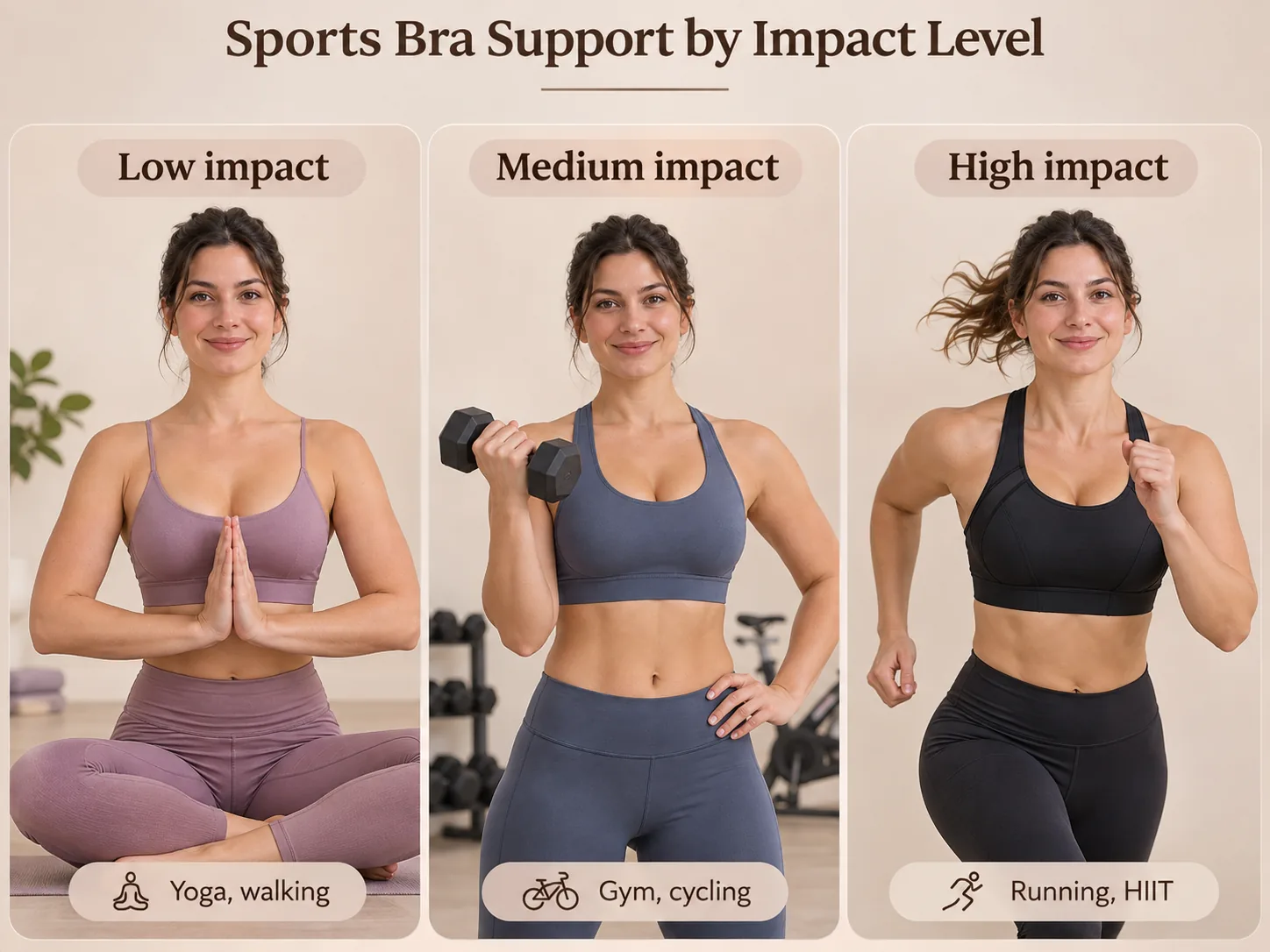
Find your starting support level
Choose how you move. This helps narrow the design—not determine your exact size or promise a specific level of bounce reduction.
Medium-impact starting point
Start with a stable medium-support design and check it against your most demanding movement. A hybrid design may be useful.
Check whether it fitsSupport labels vary by manufacturer. Breast size, movement, comfort and individual fit matter; verify any bra during actual movement.
Three ways sports bras provide support
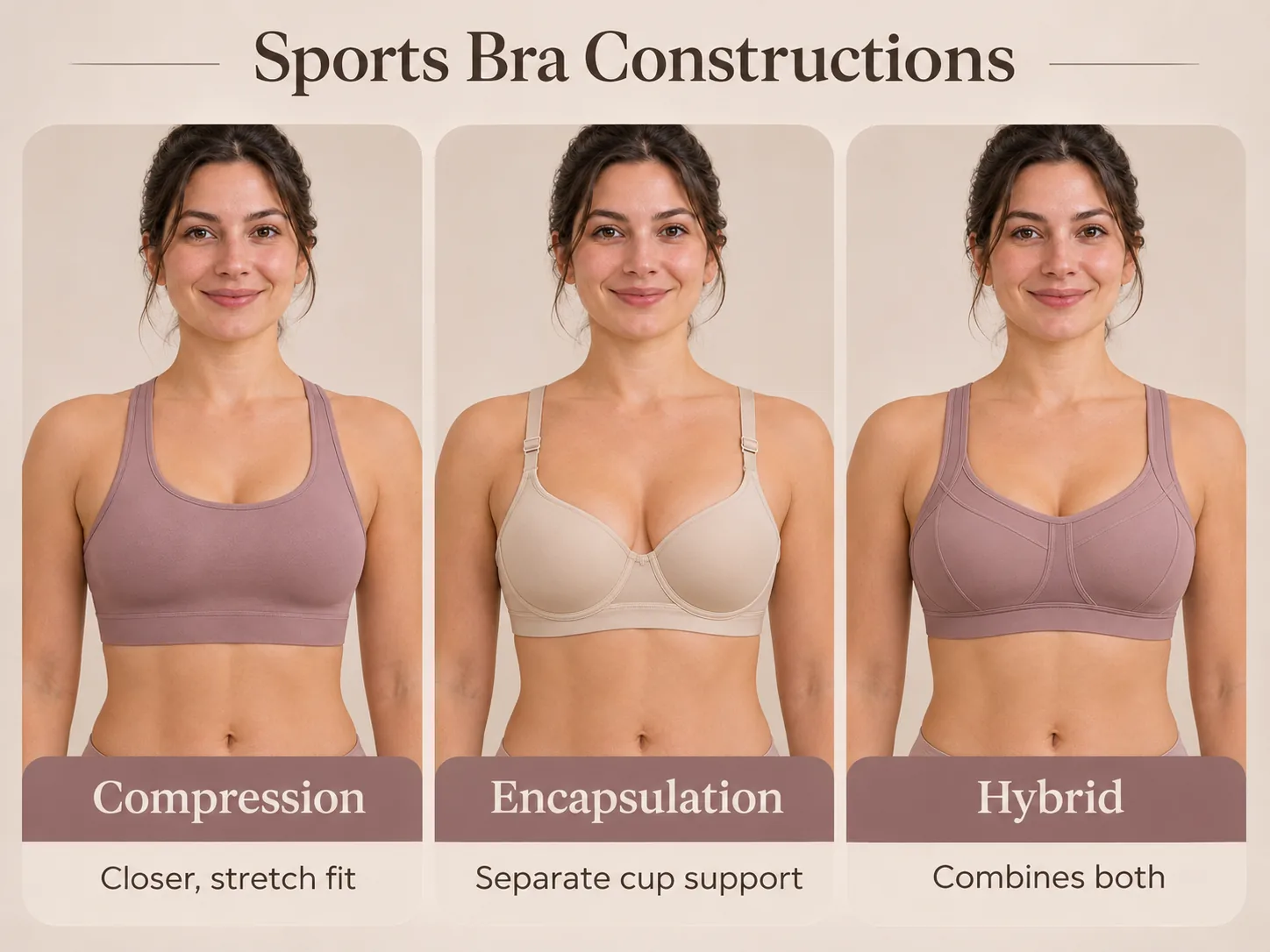
Compression
Smooth, close stretch support. Check whether the band stays firm.
Encapsulation
Separately shaped cups. Check cup containment and adjustability.
Hybrid
Combines shaping with compression. Check overall stability and comfort.
Impact levels at a glance
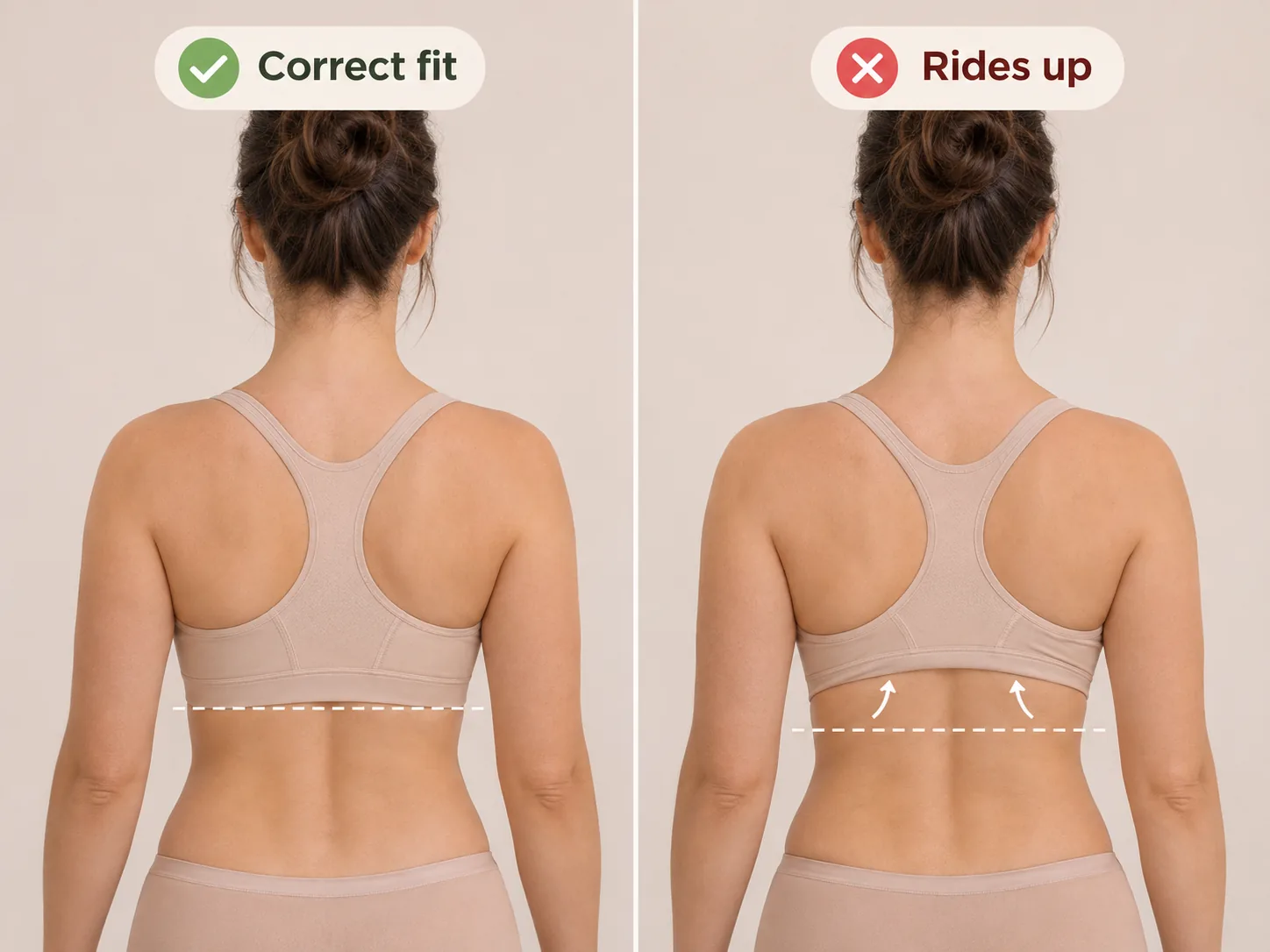
See what a secure, comfortable fit looks like
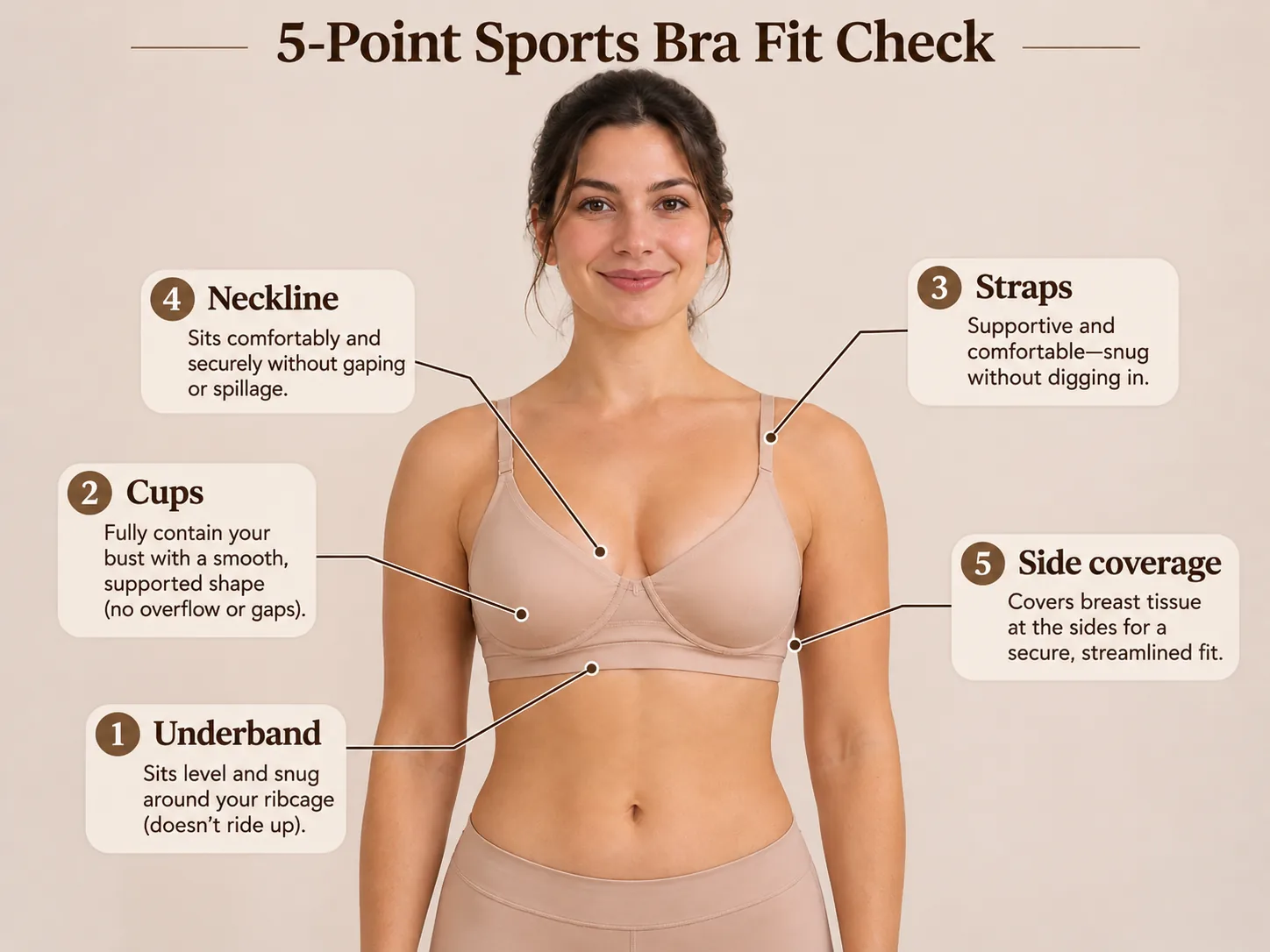
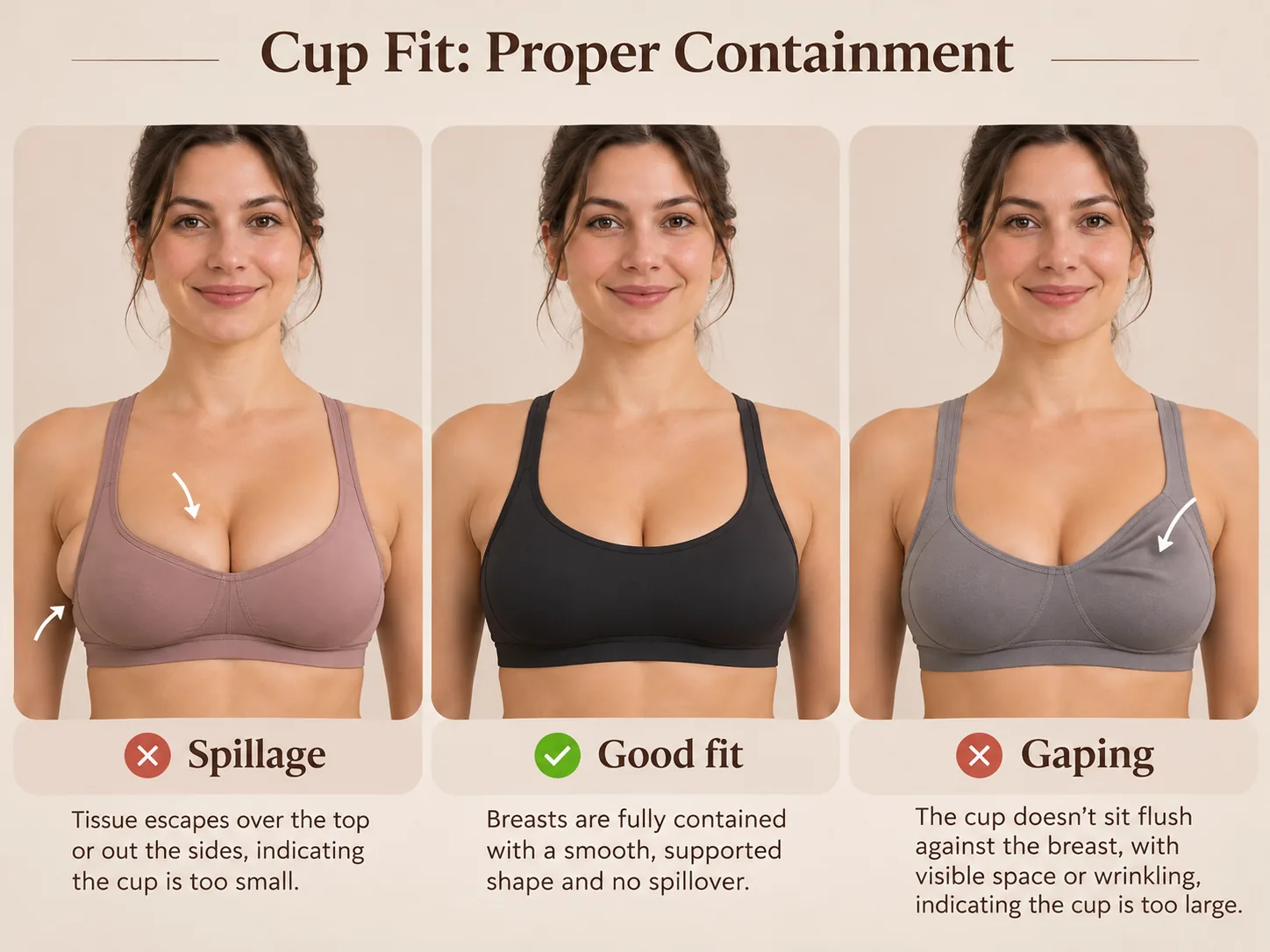
Your five-point fitting checklist
Check each point only when the fit feels comfortable and secure. These are personal checks, not a medical test.
0 of 5 fit checks passed
Something not passing? Use the fit troubleshooter before choosing a new size.
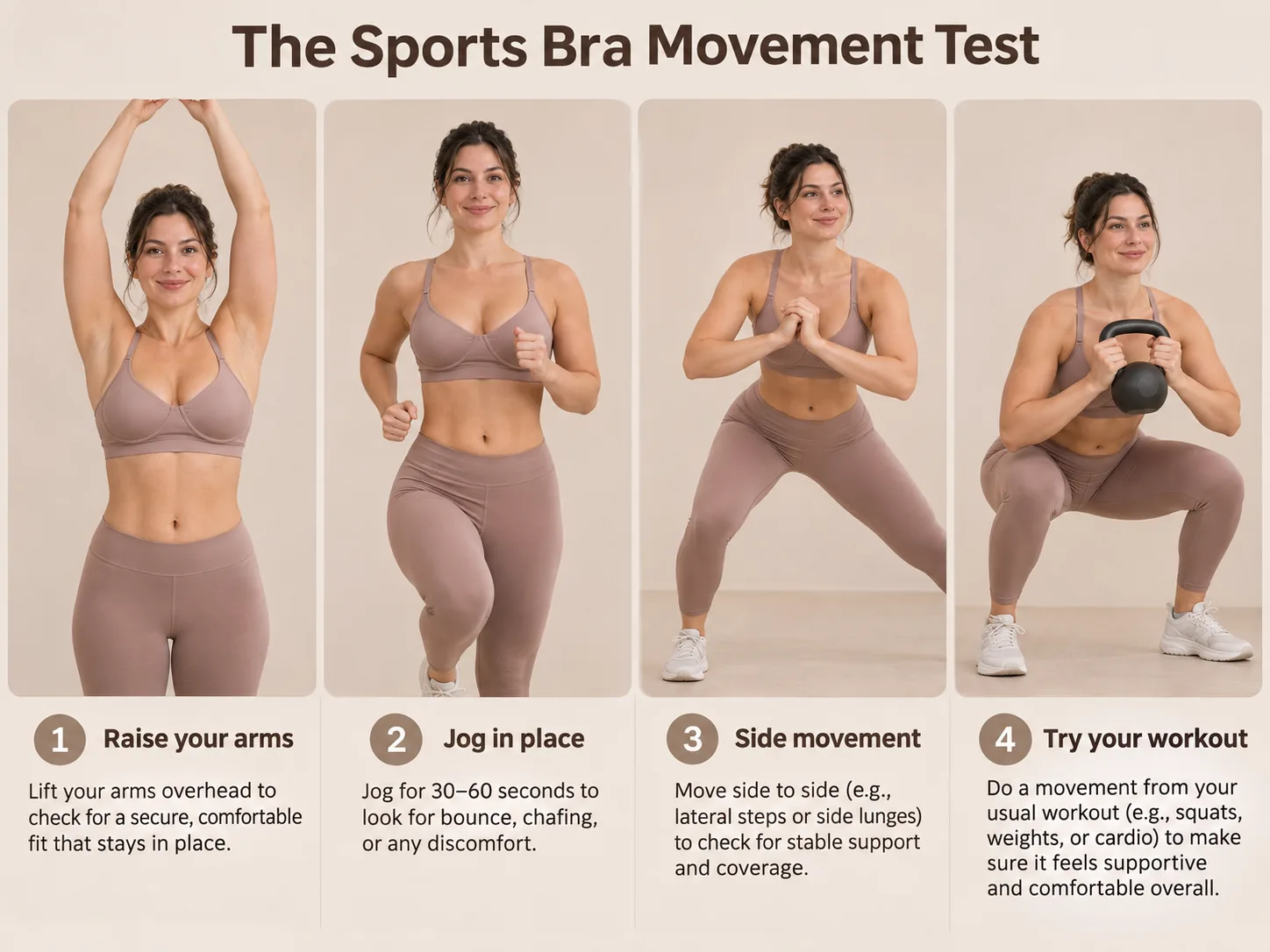
The movement check
Raise your arms, move from side to side, then briefly try your typical activity at a comfortable level. Stop if there is pain, breathing restriction or unusual discomfort.
Fix a sports bra that isn't working
Select what you notice first. These are possible causes, not a diagnosis.
Possible cause
Support architecture or impact rating may be insufficient; size can contribute.
Check next
Check band stability and breast containment during your actual workout.
What to try
Try a more structured or higher-support design; assess encapsulation or hybrid styles.
If discomfort is severe, persistent, one-sided or unrelated to fit, seek advice from an appropriate healthcare professional.
Start with your size, then verify the fit
Bra-sized: band + cup
Use the brand's band/cup chart and confirm stable cup and underband fit in movement.
Alpha-sized: XS–XL and beyond
Check both bust and underbust measurements where provided. A letter size isn't universal.
Quick buying checklist
- Matches the highest-impact part of your workout
- Band feels stable without limiting breathing
- Cups and sides contain comfortably
- Straps stay secure without painful pressure
- Fabric and seams do not chafe
- Closure and removal suit your mobility needs
If your fit changes with pregnancy, postpartum recovery or other circumstances, prioritize comfort and accessible construction. Persistent or unexplained breast pain deserves professional assessment.
A few sports bras to consider
Compare different support constructions for your workout, then check the selected product's size chart and movement fit.
As an Amazon Associate I earn from qualifying purchases. About our affiliate links
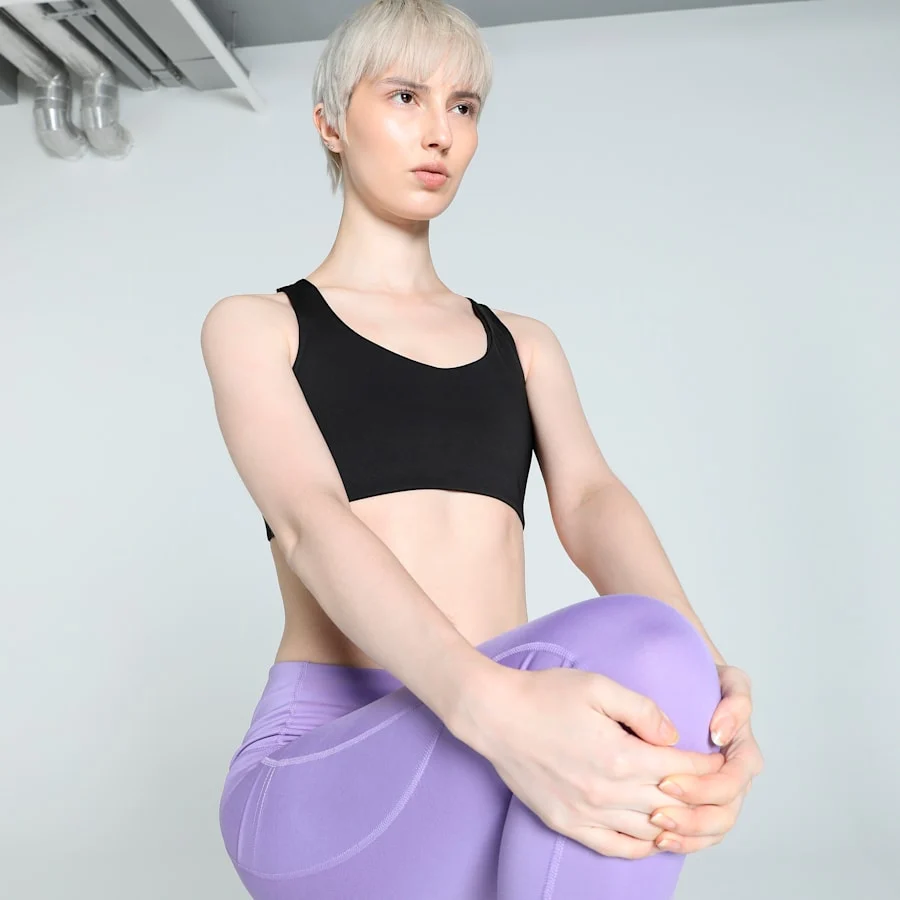
PUMA
High Impact To The Max Running Bra
High-impact racerback with breathable spacer padding, a back closure and moisture-wicking fabric.
View on Amazon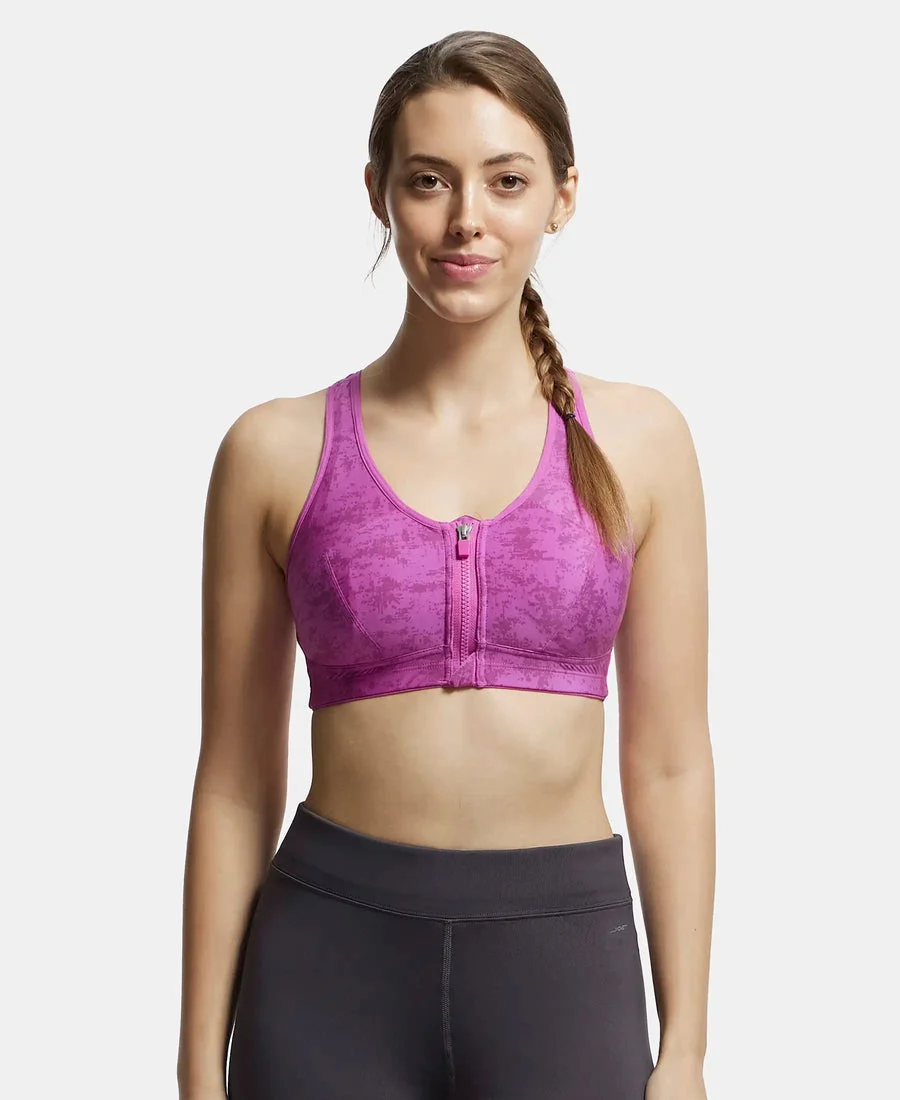
Jockey
MI02 Front-Zip Sports Bra
A wirefree, padded full-coverage racerback with a front zip, designed for medium-impact workouts.
View on Amazon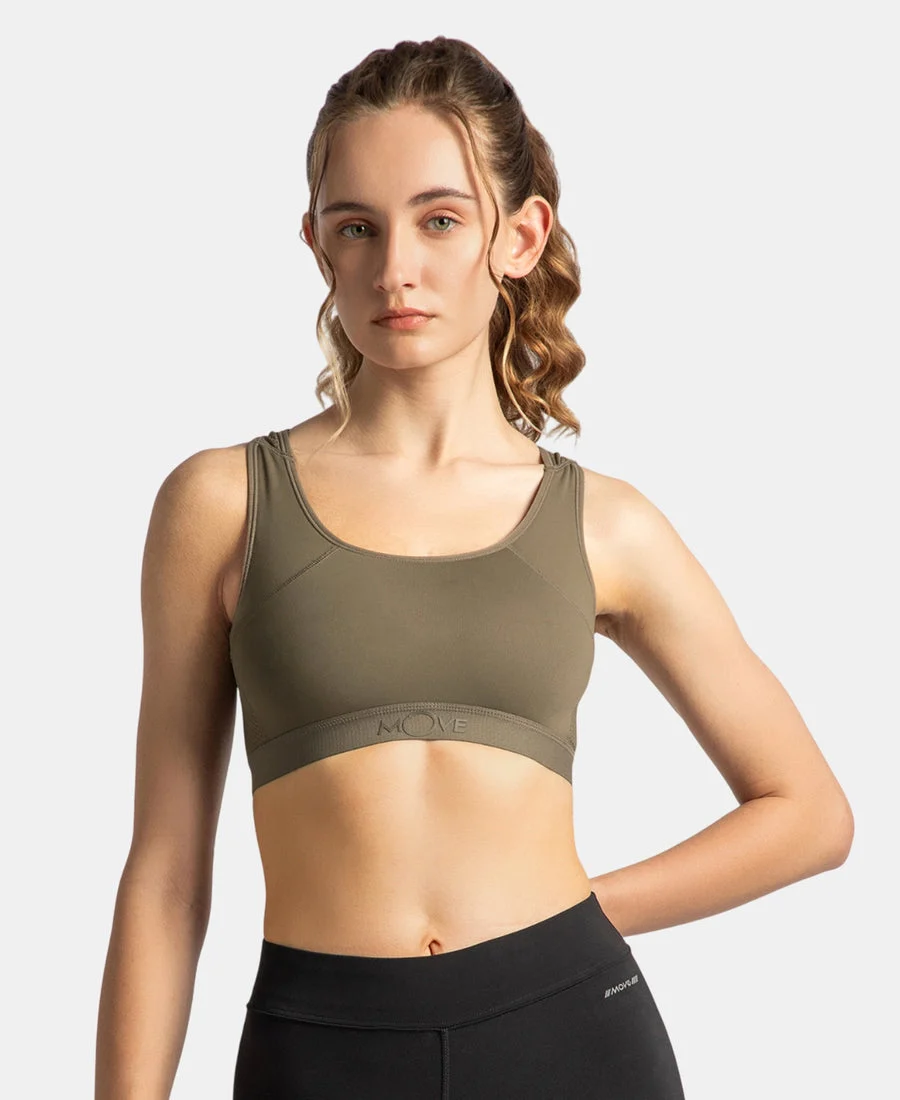
Jockey
AP20 Racerback Sports Bra
A wirefree, padded full-coverage racerback with removable cups and breathable mesh for training.
View on AmazonSports bra fit FAQs
How tight should a sports bra be?
Firm enough to stay in place when you move, but never painfully tight. You should be able to breathe deeply and move your shoulders and ribcage comfortably.
Do I need a high-impact bra for the gym?
Not always. Controlled strength work may suit medium support, while burpees, jumps or running intervals may call for higher movement control. Choose for your most demanding movement.
Is compression or encapsulation better?
Neither is universally better. Compression holds tissue closer to the chest; encapsulation shapes and supports each breast individually. Hybrid designs use both. Fit and activity matter more than the label alone.
Should I size down to reduce bounce?
No. Sizing down can restrict breathing and create painful pressure without solving the support issue. Check the band, cup containment and support construction first.
Why does my sports bra ride up?
Possible causes include an overly loose or stretched band or straps pulled too tightly. Recheck the band while moving and use the fit troubleshooter on this page.
When should I replace my sports bra?
Replace it when the underband has lost stability, the fabric or elastic remains stretched, or support is noticeably weaker. There is no reliable single replacement timetable for everyone.
Product image credits
Product photographs belong to their respective owners. For image credit corrections or removal requests, please contact us with the relevant image and page details.
The illustrations demonstrate common fitting cues. Individual anatomy, brand construction and comfort vary. This guide is educational and is not a substitute for medical advice.